Hand-Finished Hardwood Floors: Why Designers Choose Texture, Variation, and Imperfection

For years, the industry chased perfection in hardwood floors, flawless surfaces, uniform color, zero variation. The result was predictable: floors that photographed well, but felt strangely flat in real homes. Designers have quietly moved in the opposite direction.
Today, the most compelling interiors are grounded by floors that show evidence of the hand, the material, and time. Subtle irregularities. Visible grain. Depth that can’t be replicated by uniform finishes. Imperfection, when intentional, reads as warmth, not flaw. This is where hand-finished hardwood floors belong.
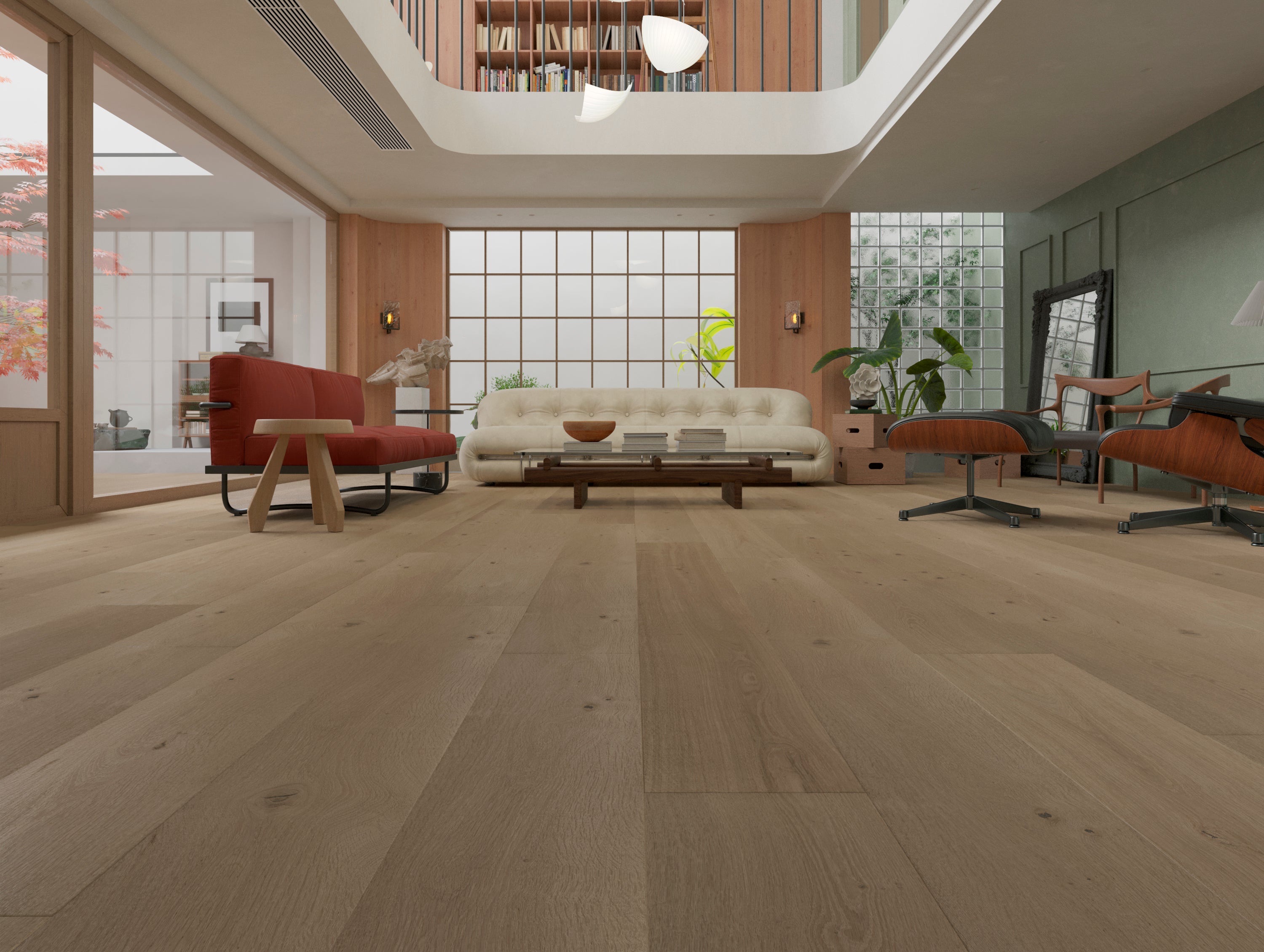
This philosophy is at the core of our Traditional Collection, where hand-scraping, wire-brushing, and reactive staining are used to highlight, not hide, the natural variation of wood.
Why Hand-Finished Floors Feel Different
There’s a difference between a floor that looks finished and one that feels resolved.
Hand-finished floors, shaped through techniques like hand-scraping, wire-brushing, and reactive staining, interact with light, texture, and movement in a way machine-perfect surfaces can’t. Edges are softened. Grain is revealed rather than buried. No two planks behave exactly the same.
The effect is subtle, but immediate: rooms feel calmer, more grounded, and more believable. These are floors that don’t compete for attention. They support everything else.

Reactive-Stained, Wire-Brushed & Hand-Scraped: Character Without Nostalgia
All floors in this collection begin with reactive staining, allowing color to emerge from the wood’s natural tannins and grain structure. Variation is inherent, not applied.
Hand-scraping introduces a gentle break in the surface plane. Softened edges and shallow undulation add tactility without visual excess. The change is felt more than seen.
Wire-brushing works alongside this by removing softer fibers and allowing the grain to lead. Together, these processes create floors that feel warm and lived-in without leaning rustic or nostalgic.
This approach works especially well in living rooms, studies, and homes where strong architecture benefits from a softer, more human counterpoint.
Reactive-Stained & Wire-Brushed (Not Hand-Scraped): Depth Without Distortion
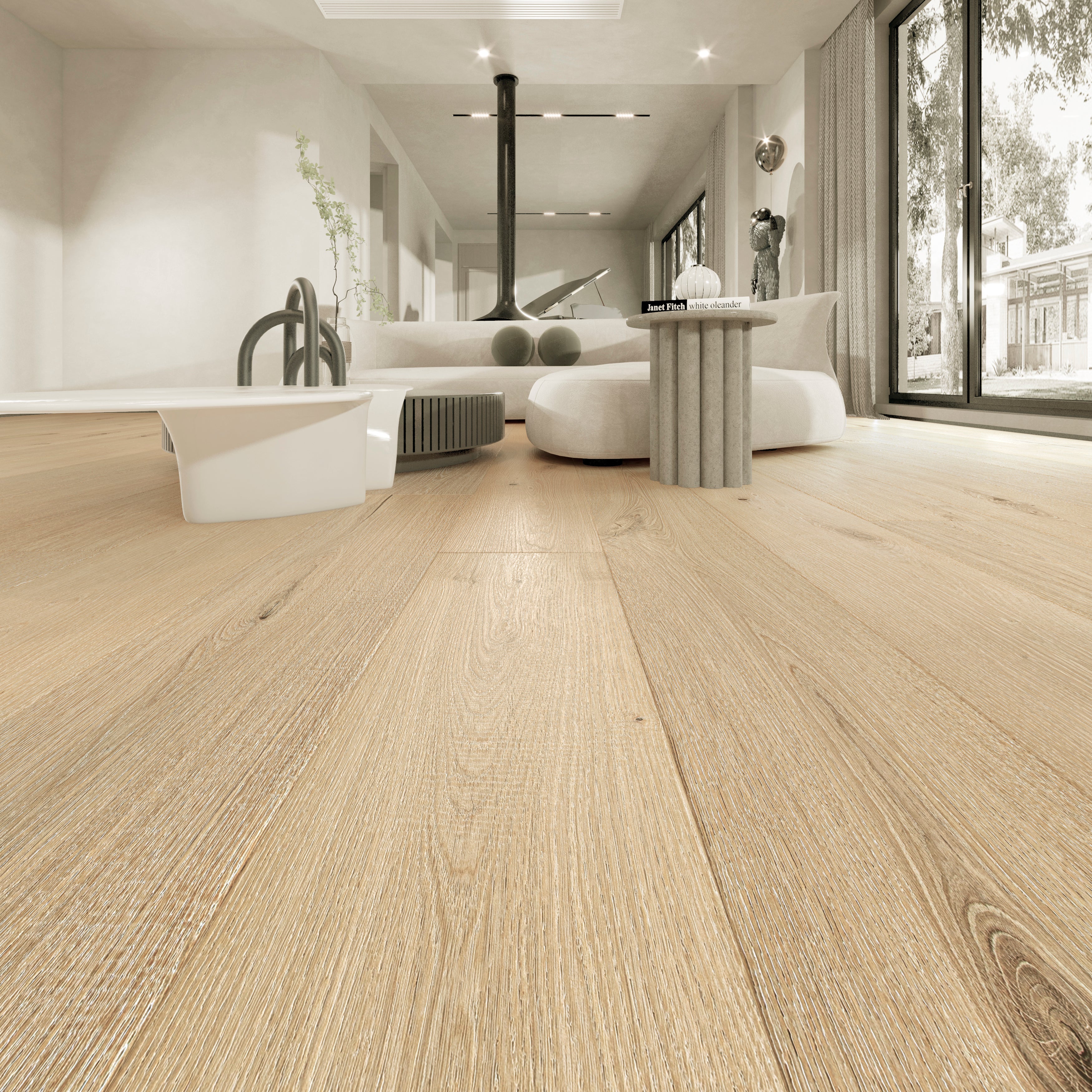
These floors share the same reactive staining process, producing natural variation driven by the wood itself. No two boards react the same way, resulting in depth rather than uniform color.
Wire-brushing reveals the grain while preserving a clean, consistent surface plane. Texture is present, but controlled.
Without hand-scraping, light moves evenly across the floor. Visual interest comes from grain and tone rather than surface movement. The result feels calm, architectural, and composed.
Designers often choose this option when clarity, alignment, and restraint are central to the space.
Why These Floors Age Better
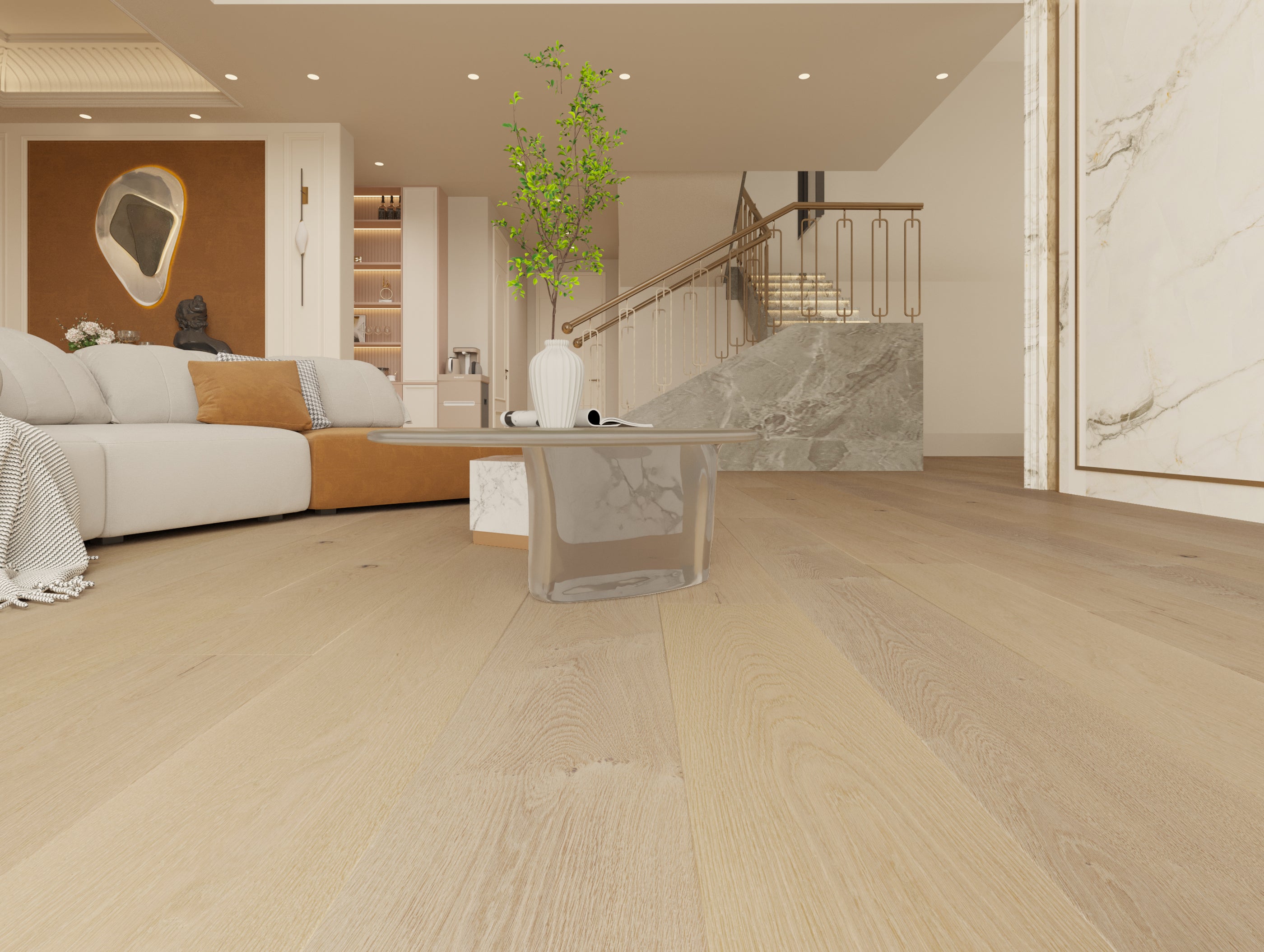
One of the quiet advantages of hand-finished surfaces is how they respond to real life. Texture disguises wear. Variation absorbs change. Minor dents, scratches, and movement blend into the existing character instead of standing out as damage. Over time, these floors don’t degrade, they evolve.
Where perfectly smooth floors tend to show age abruptly, hand-finished floors gain patina gradually. They look better lived on, not worse. This is why designers often return to these finishes after years of experience: they reduce regret.

Choosing Between Hand-Finished Approaches
Designers rarely think in terms of right or wrong. They think in terms of intent.
Hand-scraped and wire-brushed floors lean warmer and more tactile, lending softness and familiarity to spaces that benefit from a sense of tradition. Wire-brushed and reactive-stained floors feel quieter and more architectural, offering depth without visual noise when the surrounding palette is restrained. Both approaches prioritize material honesty. Neither tries to disappear entirely and neither demands attention.
Floors are rarely the focal point of a room, but they shape how everything else is perceived. When chosen thoughtfully, they create continuity, absorb wear gracefully, and allow architecture, furniture, and light to take center stage. This philosophy guides our Traditional Collection, where hand-finished surfaces are designed to age with the home rather than fight it. In well-designed homes, imperfection isn’t a compromise. It’s the point.